Alloi — Weldborn Industrial
C++ systems, interactive tools, and gameplay UI
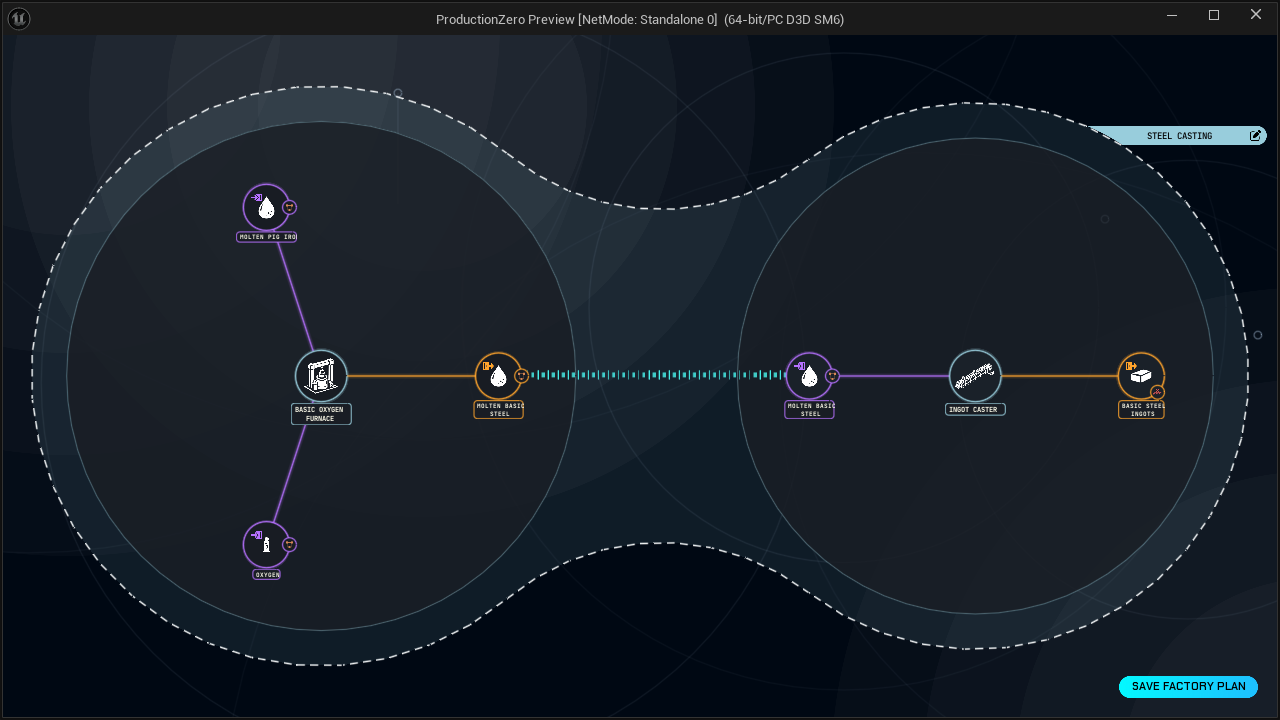
Development capture: a steel-production plan connecting resources and equipment.
At Alloi, I developed recipe-planning workflows and user interfaces for Weldborn Industrial, an industrial simulation game built in Unreal Engine. My work connected production data, gameplay state, and visual design through C++ systems, reusable widgets, and editor tools.
My focus: Recipe systems · Gameplay UI · Developer tools
Technology: C++ · Unreal Engine · Slate · UMG · Blueprints · JSON · Figma · Git
Recipe exploration & production planning
The challenge: Help players understand interconnected recipes and turn production requirements into usable plans.
I implemented the Unreal recipe-planning interface and workflow: interactive graph navigation, equipment and block selection, persistent production plans, and contextual diagrams in the equipment inspector. Pan, zoom, maximize, and resource tooltips let players move between the overall production chain and individual steps.
This work connected a native recipe-planning backend with the player-facing application, keeping selection, saved intent, and presentation consistent across the planner and HUD.
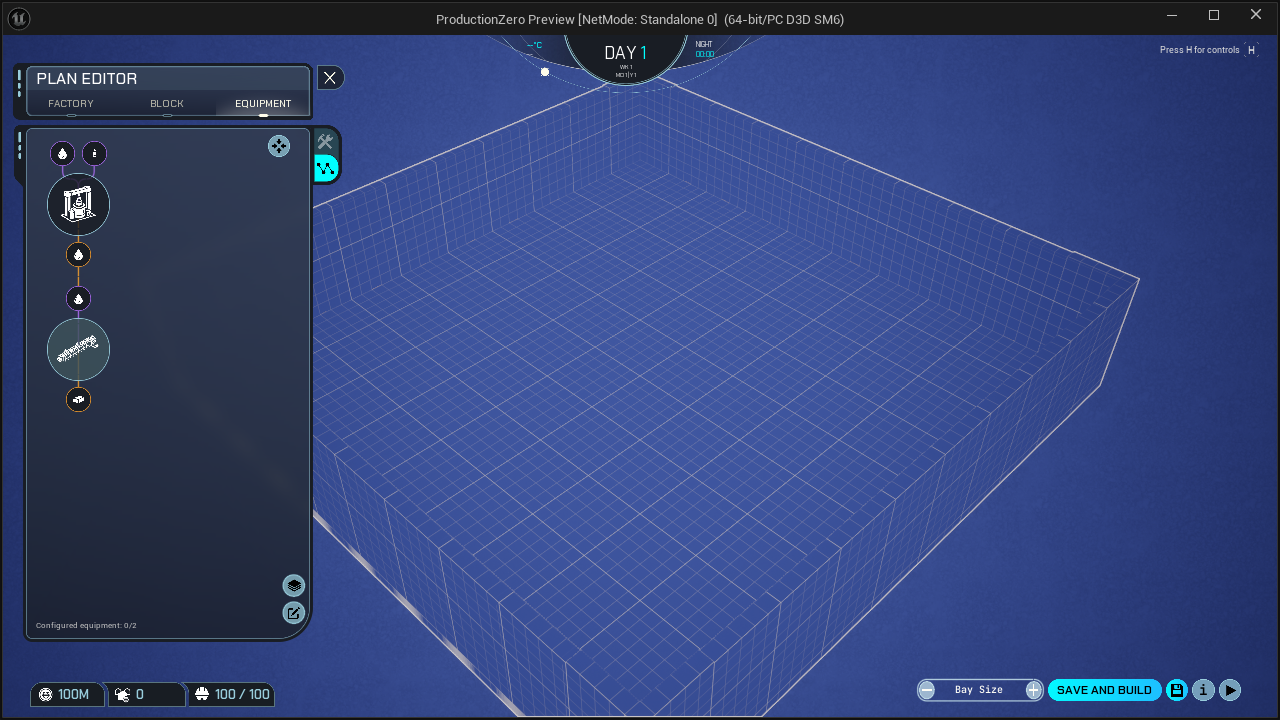
Development capture: the equipment plan view integrated into the Bay authoring HUD.
Gameplay HUD & equipment inspection
The challenge: Present detailed simulation information without overwhelming the player or making controls inconsistent.
I built and integrated reusable UI for equipment inspection, navigation, contextual actions, status indicators, and tooltips. Typed presentation data and event-driven updates connected the interface to gameplay state. The work also covered selection feedback, contextual cursors, popup input behavior, and shared HUD hosting for production planning and the Blueprint Library.
From Figma designs to Unreal interfaces
I developed and extended a Figma-to-Unreal implementation pipeline using structured manifests and generated Slate-backed widgets. My contributions covered layout and rendering behavior, clipping, opacity, reusable components, native background blur, and interaction states.
The same workflow supported production interfaces including contract offers, objectives, dialogue, and the world minimap—bridging design intent with maintainable native UI.
Authoring tools & structured data
I built equipment-definition editor functionality around offline JSON authoring, validation, and saving. Visual configuration included mesh fitting, grid previews, and typed equipment ports. These tools connected structured content with an interactive editing workflow and surfaced invalid definitions before saving.
Tutorials, dialogue & notifications
I implemented contextual tutorial callouts, selectable highlight targets, independently timed concurrent messages, and configurable completion waiting. Shared text emphasis and Ink dialogue presentation supported narrative UI, while a typed event bus and notification routing connected gameplay events to player feedback.
Engineering approach
- Separate application state, presentation, and reusable UI components.
- Use typed data and event-driven communication across gameplay interfaces.
- Validate authored data at tool boundaries and preserve saved production intent.
- Add automated coverage for interaction, data flow, and rendering behavior.
Team context: Weldborn Industrial was a collaborative project. This case study focuses on my recipe-planning workflow, UI implementation, and authoring-tool contributions; the native simulation, artwork, and broader game were developed with the team.